Stop editing every breath: why honest takes beat comped perfection

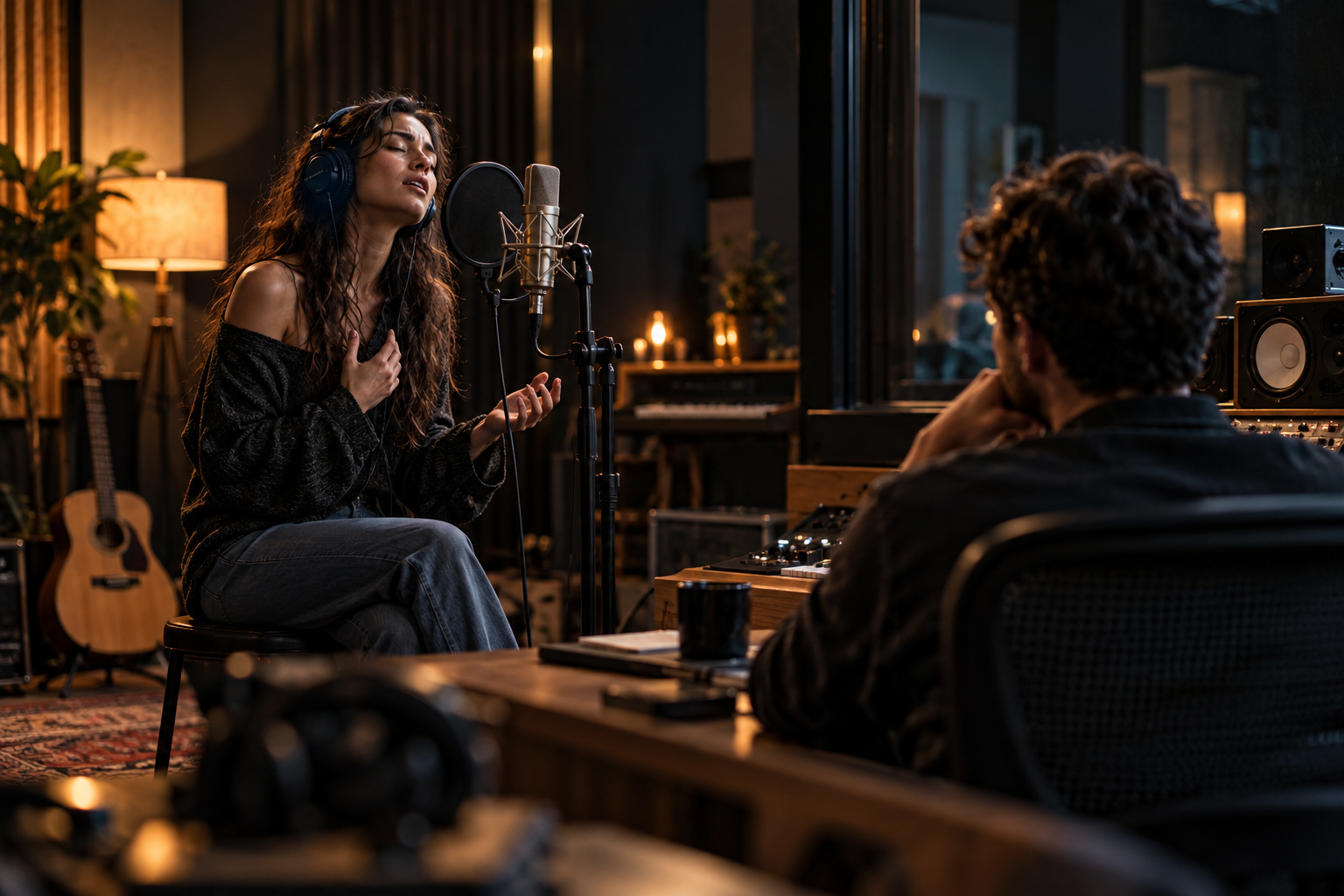
The singer stops before the second verse. She looks at me through the glass and says, “I breathed too loud on that one.” I rewind, listen. You can hear a small intake of air under the acoustic guitar just before she comes back in. It is a room sound as much as a vocal sound. It does the same thing a chair creak does on an old folk record: it tells you someone was sitting there.
This is the argument I keep having with myself at the edit desk. The tools to remove every breath, nudge every attack and comp three takes into one frictionless performance are right there in the DAW. And most of the time I use less of them than I used to. Not out of principle. Out of results. The takes that leave the breath in tend to move people more than the ones that do not, and I have watched that play out enough times to trust it.
What gets lost when you tidy a performance
Think about what actually carries a song. Not the notes. The lean.
A real drummer pushes into the chorus and sits back in the verse. A bass player lands a few milliseconds behind the kick instead of dead on it. That micro-timing is where the feel lives, and it is exactly the stuff a grid, a comp or a quantize pass scrubs away. You do not hear the missing lean as “bad timing.” You hear it as flatness, and the ear reads flatness as boredom long before the brain has a word for it.
I have made that mistake. On a record a few years back I comped a lead vocal down to the most in-tune, most on-beat version of every line. Technically clean. Playback: dead. I went back to the raw takes and rebuilt it keeping the pushed lines, the slightly flat ones that sounded more honest the more I listened. The singer’s own reaction told me everything: “that’s the take.” The one I had just spent two hours ruining.
The comp is a tool, not a religion
Let me be clear that I am not anti-comping. A lead vocal with a real howler in line three needs fixing, and nobody in their right mind ships it raw. Slicing in a better phrase from a keeper take is fine. That is craft.
What I have stopped doing is the endless micro-comp, hunting for a version of every syllable with zero flaw. It is a video-game instinct, and it never quite ends. There is always one more click to chase. Somewhere in that loop the performance stops being a performance and becomes an assembly. The singer’s identity, the little grit on the third “hold,” it gets sanded off one syllable at a time until the take is correct and anonymous.
Here is the test I use now. Leave the comp alone for a day. Play it tomorrow in the car. If it still feels alive, stop. If it feels like a robot reading a shopping list, you have gone too far, and the fix is usually to put back a few of the “wrong” bits.
Imperfections break the sometimes too-smooth perfection of the software world. Hardware does it naturally. Your players do it too, if you let them.
Doubles and the honesty of two takes
Nowhere does this show up more clearly than double tracking. The whole point is natural difference. You record the same part again, and the timing, the pitch, the breath do not match. That mismatch is the magic. It is what turns one voice in the center into width, depth and presence. Pan the takes apart and you get a sound you cannot fake with a copy of the first take.
Plugin-based doublers get closer than a straight copy, but they are not two people. Two real takes beat the best of them every time, because the singer cannot repeat the second take perfectly and that is the point. If you are reaching for a doubler as a shortcut for singing it again, you are trading the thing that makes doubles work for the thing that makes them convenient. Sing it again.
Same rule applies when the double is processed. It should usually sit duller and more compressed than the lead, adding body without fighting for presence. Cut the top on the doubles, keep the lead clear. That part is just engineering. The part people skip is the honesty of the second performance itself.
When perfection is the cover story
Part of why we over-edit is the quiet pressure that a mix must be “right.” Scroll the production feeds for a minute and you will find it everywhere: thumbnails and titles telling you your work is wrong, that you are doing it the amateur way, that there is a correct method you are missing. There is a whole industry banking on that anxiety.
Mixing engineer Sara Carter puts it well: there is real fear among newer producers of doing things wrong, and the problem-focused angle just clicks better than the solution-based one. It is not harmless. It trains you to chase correctness instead of the song. Tools are not evil. The reflex to fix every small thing “properly” is what costs you the take.
The commit mindset
I have found one habit that kills over-editing better than any rule: make a decision and live with it.
On a hardware synth you play the take, print it, and the sound is frozen. There is no menu to go back into. You have committed, which sounds like a constraint and turns out to be a gift. Instead of endless micro-adjustments that add nothing to the emotion, you build the song stone by stone. Each layer becomes real because you cannot chicken out of it later. The commitment is what pushes the record forward, and it is the exact thing a DAW, with its infinite undo, quietly discourages.
I do not own much hardware. But I can fake the commitment in the box. Print a take. Bounce the comp to a fresh track. Print the doubled vocal instead of leaving both takes live. Add friction where the software is frictionless. The less I can fiddle with a part, the more I love the part, because I had to mean it once.
What actually makes a take matter
Here is the observation that reframed all of this for me. Listeners anchor on the most human element in a record. When one instrument actually breathes, pushes where it should push and softens where it should soften, the whole production starts reading as performed. Even the programmed parts start reading as choices, the way a drum machine or a synth does on countless fully human records. Nobody calls an 808 fake. The problem is never the machine. It is a record where nothing was played.
So when I am editing, I ask which performance is carrying the song. The lead vocal, the guitar line everybody hums, the piano the verse hangs on. That is where the honesty has to survive, because that is where attention lives. A buried pad can be as perfect as it likes. The hook cannot afford to be sanded clean.
My short list at the desk
- Leave the breaths in unless one is genuinely distracting. Usually they are not.
- Comp for a broken line, not for a flawless one. Fix the howler, keep the push.
- Sing the double. Do not double-dip with a copy or a plugin if you can help it.
- Print the take and live with it. Friction breeds better decisions.
- Check it in the car before you touch it again. If it breathes there, it is done.
None of this is a rule I hand to clients. It is just how the good records in my room have always happened, long before the tools made every flaw removable. The breath under the second verse is still in the mix, by the way. She asked me to take it out. I left it. She came back after the first listen and said it was the right call.